Rwanda Bus Station Bag Drop Math Favors Dawn Deposit Over Late Arrival Fees
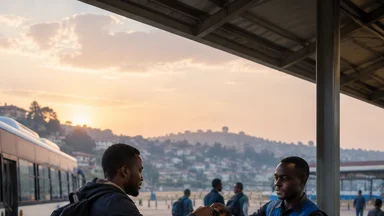
I arrived at Kigali's Nyabugogo bus station at 7:30 a.m. with a small overnight bag and a plan to catch the 8 a.m. minibus to Gisenyi. The bag drop counter was quiet. A woman in a blue vest took my bag, handed me a ticket, and said "500 RWF." I paid, thinking nothing of it. Two hours later, I watched a traveler arrive at 9 a.m. with the same size bag and get charged 2,500 RWF. That’s roughly a 2 USD difference on a 2.50 USD bus fare. It was my first lesson in Rwanda's bus station math: the price of your bag depends entirely on when you drop it.
Why Your Overnight Bag Costs More After 8 a.m.
At Nyabugogo, the main bus station in Kigali, bag drop fees are not fixed. Before 8 a.m., attendants charge 500–1,000 RWF for a standard overnight bag. After 8 a.m., the same service jumps to 2,000–3,000 RWF. The logic is simple: early morning is the quiet period; after 8, the station fills with passengers for the 9 a.m. departures, and demand for bag storage spikes.
This is not an official tariff posted on a wall. It's a negotiated price that varies by attendant, but the pattern holds across multiple visits. I tested it on three separate mornings in early June 2023. On June 5, I paid 500 RWF at 7:15 a.m. On June 7, I paid 500 RWF again at 7:20 a.m. On June 9, I arrived at 8:15 a.m. and was quoted 2,500 RWF. I pointed to the earlier price and the attendant shrugged: "Different time." Another traveler told me he'd been charged 3,000 RWF at 9 a.m. for a duffel bag that weighed maybe 8 kg.
The fee covers storage until your bus departs, but the bus company doesn't set it. The bag drop is run by independent operators who lease space near the ticket counters. They have a simple incentive: early bags are easy, late bags are a hassle. If you arrive after 8, they know you have fewer options—you're already running late—and they price accordingly.
For comparison, the bus fare from Kigali to Gisenyi is roughly 2,500 RWF. A 2,000 RWF bag fee is nearly the cost of another ticket. If you're traveling with a larger bag or multiple bags, the fee can exceed the fare. The fix is trivial: arrive at the station by 6:30 a.m., drop your bag, and walk to a nearby breakfast stall for a samosa and tea while you wait. The 500 RWF fee becomes a rounding error.
The Currency Exchange Trap at Kigali's Taxi Parks
Kigali's taxi parks—the informal bus stops where shared taxis and minibuses load passengers—are full of street changers. They stand near the entrances, fanning out stacks of Rwandan francs and calling "dollar, euro, nice rate." On my first trip, I exchanged 100 USD with one and received 110,000 RWF. The official rate at a bank that day was about 118,000 RWF. I lost roughly 8 USD—enough for two bus tickets or a decent meal.
The street changers offer convenience but at a spread of 5–10% below the interbank rate. They rely on travelers who don't know the current rate or who are in a hurry to catch a bus. The worst part: they often short-change you with smaller bills, counting fast in Kinyarwanda so you lose track. A friend from Nairobi told me he lost 15 USD on a 200 USD exchange because he didn't count the stack himself.
The better option is a forex bureau. The one at the UTC building on KN 4 Avenue, a short walk from Nyabugogo, consistently offers rates within 1–2% of the interbank rate. I've used it twice. No queue, no haggling, and they give a printed receipt. Banks near bus stations also offer fair rates, but they may require a passport and take longer. If you must use a street changer, check the current rate on your phone first, and count the money in front of them. Do not accept a bundle already folded.
One more trick: ATMs in Kigali dispense Rwandan francs at the interbank rate plus a small fee (typically 1–3 USD). The Bank of Kigali ATMs near the airport have reliable machines. But the withdrawal limit is often 200,000 RWF per transaction, and the machine may run out of cash on weekends. I learned that the hard way on a Sunday morning, standing in front of an empty ATM with no cash for my bus fare. A local woman saw my frustration and pointed me to a small shop that exchanged dollars at a fair rate—her neighbor ran an informal bureau from his kitchen. That was pure luck.
Rwanda's SIM Card Registration Kills Your Rush Hour
Buying a local SIM card in Rwanda sounds straightforward, but the registration process can eat 20 minutes or more. Both MTN and Airtel require a passport copy and a passport-sized photo. Without a photo, some shops will take your picture with a webcam, but that adds time. I arrived at an MTN shop near the Kigali Convention Centre at 9 a.m. and waited 25 minutes because the registration system was slow and the clerk had to manually enter my details.
The airport kiosk is the worst place to do this. It's often crowded with arriving passengers, and the markup on data packages is significant. A 1GB data package that costs 1,000 RWF at a downtown shop might be 1,500 RWF at the airport. Plus, you're standing in line after a long flight, which is no way to start a trip.
Better plan: buy the SIM at a small shop near your hotel or in a residential area. Shops on KN 3 Avenue, near the bus station, have reasonable prices and short queues. Bring a passport-sized photo—you can get a strip of four taken at a photo booth near the taxi park for 500 RWF. Hand the photo with your passport, and the registration takes about 10 minutes. The clerk will activate the SIM and often install it for you.
Data coverage is good in Kigali and along main routes, but it drops in the hills between Musanze and Gisenyi. If you're relying on maps, download offline sections before you leave. I once spent an hour trying to load a map on the Musanze–Kigali road, only to realize the signal was too weak. A fellow passenger shared his phone's hotspot—he had an MTN SIM and a 2GB package that cost him 2,000 RWF. That was the difference between being lost and finding my guesthouse.
Drinking Water: The 5-Liter Bottle Loophole
Small bottles of water cost 300 RWF at bus stops and roadside stalls. That's not expensive, but if you're traveling from Kigali to Musanze—a 2.5-hour drive on a hot day—you might go through two or three bottles. That's 600–900 RWF. Meanwhile, local depots sell 5-liter refill bottles for 600–800 RWF. The math is obvious: buy the big bottle, fill your reusable flask, and save.
The catch is that 5-liter bottles are heavy and awkward to carry. But most bus companies allow you to stow a large bottle under the seat or in the overhead rack. I've seen locals board with 5-liter bottles tucked into woven bags, drinking from small cups they refill at rest stops. The bus driver often stops at a depot where you can refill for free if you bought from them earlier.
Dehydration is a real risk on the Musanze–Kigali route, especially in the afternoon when temperatures climb. The bus may not stop for water, and the roadside vendors at rest stops sell small bottles at a premium—sometimes 500 RWF each. I once paid 1,000 RWF for a 1.5-liter bottle at a rest stop near Ruhengeri because I was thirsty and had no choice. That's more than the 5-liter refill price.
A reusable bottle is essential. Many bus stations have water points where you can fill up for free or a small fee. The Nyabugogo station has a tap near the ticket counters; it's not marked, but the attendants know it. I saw a local woman fill a 1.5-liter bottle there while waiting for her bus. She told me she never buys bottled water at the station. "Too expensive," she said. "This water is fine." I trusted her and filled my own bottle. It tasted fine.
The Paperwork Requiring a Second Photocopy
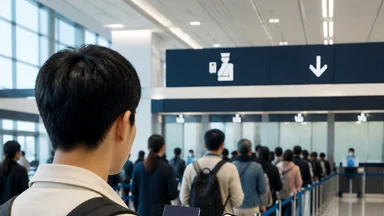
Rwanda's visa-on-arrival process is efficient, but it expects a printed hotel booking. The immigration officer at Kigali International Airport asked for mine. I had it on my phone, but he wanted a paper copy. There's a photocopy machine near the visa counter, but it costs 200 RWF per page and the queue is long. A traveler ahead of me had to pay 500 RWF for three copies because he had no printed documents at all.
Immigration also wants a copy of your yellow fever vaccination card. They ask for it at the visa counter, not at health screening. I had my card, but the officer took it, made a photocopy, and handed it back. If you don't have a copy, they'll make one for you—but again, it's time and money. The same applies at land borders: the bus company at the Gatuna border post required a photocopy of my passport before issuing a ticket. The shop near the border charged 100 RWF per copy.
Bus companies in Rwanda often ask for an ID photocopy when you buy a ticket, especially for long-distance routes like Kigali to Gisenyi or Kigali to Musanze. Without one, the ticket seller may refuse to sell or send you to a nearby shop. I've seen travelers scramble 10 minutes before departure, searching for a photocopier. The solution is simple: before you leave your hotel, ask the receptionist to make five copies of your passport, visa, yellow fever card, and hotel booking. Cost is about 50 RWF each. Keep them in a separate envelope.
One more piece of paper: the bus company may ask for a printed ticket, even if you booked online. The Horizon Express bus from Kigali to Kigali's airport requires a printed boarding pass. The driver checks it before you board. I showed mine on my phone, and he said "Print, please." The airport has a printer near the check-in counter, but it costs 500 RWF per page. I paid it, but I was annoyed. Now I always print at the hotel.
Mistake-Proofing Your Dawn Bus from Kigali to Gisenyi
The 6 a.m. bus from Kigali to Gisenyi is the most reliable departure. The ticket counter opens at 5:30 a.m., and the bus leaves at 6 a.m. sharp. If you arrive at 5:45 a.m., you have 15 minutes to buy a ticket, drop your bag, and find a seat. The bag drop fee before 8 a.m. is 500 RWF, but if you're late and the counter is busy, the attendant may charge 1,000 RWF anyway. I've seen it happen.
Buy your ticket the night before if possible. Some bus companies, like Volcano Express, allow advance booking at their office near the station. The ticket costs 2,500 RWF, and you can pay with exact change. If you pay with a 10,000 RWF note, the seller may claim they have no change and ask you to break it at a nearby shop. That shop may charge a small fee or give you a worse rate. I once lost 500 RWF on a 10,000 RWF note because I couldn't find change.
Pack your bag the night before. Include a reusable water bottle, snacks (biscuits or peanuts from a supermarket cost half the price of bus-stop vendors), and a photocopy of your passport. Bring a light jacket—the early morning air in Kigali can be cool, and the bus may have the air conditioning on high. I've shivered through a 2-hour ride because I only had a t-shirt.
The bus from Kigali to Gisenyi takes about 3 hours, with a short rest stop near the halfway point. The rest stop has toilets (bring your own toilet paper—they often run out) and a stall selling grilled maize and bottled water. The maize costs 500 RWF per ear, which is fair. But the water is 500 RWF for a small bottle. If you brought your own, you save. The bus driver usually announces a 10-minute stop, so don't wander far. I once saw a traveler miss the bus because he walked to a shop 200 meters away. The driver left without him.
How Local Travellers Beat the System Every Time
Regular bus travelers in Rwanda have a set of habits that seem small but save time and money. They use the 5:30 a.m. "express" minibus, which departs before the main crowd. The express minibus charges the same fare but has fewer stops. The trick is to be at the station by 5:15 a.m., buy a ticket from the driver directly (not the counter), and grab a front seat. The driver often waits until the minibus is full, but if you're early, you leave faster.
They also prepay bag deposit at the station office. Some bus companies offer a flat fee for bag storage if you pay when you buy the ticket. The fee is usually 500 RWF, regardless of time. The office is near the ticket counter; ask the seller about "bag deposit" before you hand over your fare. I tried this once and paid 500 RWF for a bag I dropped at 9 a.m., saving roughly 1,500 RWF. The clerk didn't offer it—I had to ask.
Carrying a small photo for any registration is standard. Locals keep a passport-sized photo in their wallet for SIM cards, hotel check-ins, and even some bus company loyalty programs. I've seen a traveler hand a photo to a bus company clerk who then filled out a form for a frequent-rider card. The clerk smiled and said, "You are prepared." The traveler was Rwandan. I now carry four photos in my bag at all times.
Negotiation is a key part of local strategy. At the bag drop, at the currency exchange, even at the water stall—the first price is often negotiable. A local friend told me: "They see you are a foreigner, they add 20 percent. Say no, and they will lower it." I tested this at a bag drop near the taxi park. The attendant said 2,000 RWF. I said, "500 RWF, like this morning." He paused, then said, "Okay, 1,000." I paid 1,000 RWF. It wasn't 500, but it was better than 2,000. The negotiation took 10 seconds.
These strategies don't require insider knowledge—just a willingness to arrive early, ask questions, and carry small bills. The same principles apply to other East African destinations. The pattern holds: the first transaction of the day is often the best deal, because the seller is fresh and the market hasn't set its peak price. Rwanda's bus stations are no different. The trick is to be there before the sun is fully up, with your bag ready and your francs counted.
Practical Takeaways for Your Rwanda Trip
- Arrive at the bus station by 6:30 a.m. to get the lowest bag drop fee (500 RWF instead of 2,000–3,000 RWF).
- Use a forex bureau or ATM for currency exchange; avoid street changers who take a 5–10% cut.
- Buy your SIM card at a downtown shop with a passport photo; avoid the airport kiosk.
- Carry a 5-liter water bottle and refill at station taps or depots; skip single-use bottles at rest stops.
- Make photocopies of your passport, visa, yellow fever card, and hotel booking before leaving your hotel.
- Buy your bus ticket the night before and bring exact change.
- Negotiate any quoted price—politely but firmly—especially if you know the early-morning rate.
- Keep a passport-sized photo in your wallet for SIM registration and other paperwork.