Puebla Market Cash Math Favors Morning Tortilla Vendors Over Afternoon Tourist Tlayuda Counters
Most travel coverage of Puebla's food markets tells you to show up around 11am, wander the aisles, and order a tlayuda from a cheerful counter. That advice costs you roughly double what a local pays and delivers a thinner, pre-made tortilla. The real market math favors the morning tortilla vendors who start at 5am, sell out by 9am, and never touch a card reader. This is not a secret. It is simply ignored by glossy blog itineraries that treat market visits as afternoon photo opportunities.
The Tlayuda Trap: Why Tourist Counters Open Late and Cost Twice
Walk into Mercado El Carmen at 2pm and you will find a row of tlayuda stalls charging 80 to 120 pesos each. The tortillas are pre-made, often from a central supplier, and the toppings—refried beans, quesillo, chorizo—are assembled quickly. The same tlayuda at a morning stall, made from hand-pressed masa sourced from a local nixtamal mill, costs 45 to 60 pesos. The difference is not just price; it is texture, flavor, and the amount of filling.
Morning vendors press their tortillas on small comales that fit a standard-sized tlayuda. By 11am, as the breakfast rush fades, many vendors switch to smaller comales to save fuel and reduce waste. The tlayuda shrinks. The price does not. A regular customer told me she stops buying tlayudas after 10am because “they are not the same.” She pointed to a stack of pre-made tortillas at a nearby stall and shrugged.
This pattern is not unique to Puebla. A similar dynamic appears at markets in many cities: vendors who cater to early commuters charge less, while later stalls cater to tourists at a premium. The geography differs, but the market logic is identical.
The tourist tlayuda counters also rely on a different customer base. They know that visitors arrive after 11am, have limited Spanish, and are unlikely to haggle. The price is set accordingly. Locals vote with their feet—and their wallets. A quick scan of any market around 8am shows queues at the tortilla stalls, while the tlayuda counters sit empty until 10:30am.
Morning Tortilla Cash Flow: The Real Market Math
Tortilla vendors in Puebla begin setting up around 4:30am. By 5am, the first customers arrive—workers buying kilos of tortillas for the day. The vendors sell in bulk: one kilo, roughly 20 tortillas, for 18 to 22 pesos. That is less than 1.10 pesos per tortilla. A tourist buying a single tortilla at a later hour will pay 2 to 3 pesos each. The markup is not malicious; it is a convenience fee for not buying in bulk and for arriving after the peak production.
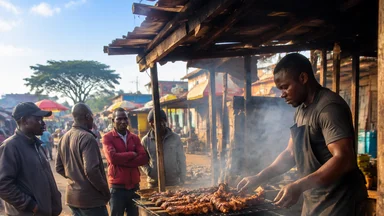
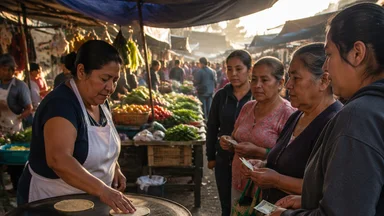
Cash is the only option before 10am. No card readers, no mobile payments. Some vendors do not even have a sign. They operate from a simple table with a comal, a basket of masa, and a plastic container for coins. The largest bill they can easily change is 100 pesos. Handing a 500-peso note at 6am will likely earn you a polite refusal and a gesture toward a nearby shop that can break it.
Local shoppers use small bills and coins. A common sight is a woman pulling a crumpled 50-peso note from a coin purse, receiving a kilo of tortillas and a few pesos in change. The transaction takes 15 seconds. The trust is implicit: the vendor weighs the tortillas by eye, the customer pays without counting. This rhythm breaks when a tourist fumbles for a card or asks for a receipt.
The blue plastic basket is a local cue. Vendors who sell fresh, hand-pressed tortillas often display them in blue or red plastic baskets lined with a cloth. White styrofoam containers signal pre-made tortillas from a central supplier. The difference is subtle but consistent. Once you see it, you will spot the tourist stalls from twenty paces.
Hygiene Shortcuts You Actually See, Not Read About
Food safety guides for Mexican markets tend to repeat the same advice: eat where the line is long, avoid raw vegetables, drink bottled water. Those are fine starting points, but they miss the visible cues that locals use. The most reliable is the apron. A morning tortilla vendor wears a clean apron—sometimes changed mid-morning. The afternoon tlayuda counter often has a stained apron that has been worn since breakfast. The difference is not about cleanliness per se; it is about whether the vendor treats the work as a craft or a shift.
Cutting boards are another tell. Morning vendors use separate boards for raw meats and cooked ingredients. You can see the board for raw chorizo, rinsed between uses, and a different board for the cooked filling. Afternoon stalls, operating at higher volume, often use the same board for everything, wiping it with a rag. The rag itself is a clue: if it is sitting in a bucket of water with floating soap residue, that is a good sign. If it is dry and hanging over the vendor's shoulder, look for another stall.
The oil is a hidden variable. Many afternoon stalls reuse the oil from the breakfast rush to fry tlayudas and quesadillas. The oil darkens and develops a stale smell. Morning vendors start with fresh oil because they have not cooked anything yet. You can ask to see the oil, but a simpler test is to arrive early enough that the oil is still clear.
Routine checks can be bypassed when staff are rushed. The same principle applies here. A vendor who is not rushed, who takes time to press each tortilla, is more likely to follow basic hygiene steps. The morning pace allows for that. The afternoon rush does not.
The Payment Reality: Pesos, Not Plastic, Work Best
ATMs near the zócalo in Puebla charge 35 to 50 pesos per withdrawal. That is a fixed fee, so withdrawing a small amount means losing a large percentage. The better strategy is to withdraw 500 to 800 pesos from a bank ATM—preferably one inside a bank branch—before heading to the market. Oxxo stores offer better exchange rates than the tourist kiosks near the main square, but they still charge a small fee. The simplest approach is to arrive with pesos already in hand.
Many market stalls accept only 20, 50, and 100 peso bills. A 200-peso note is sometimes okay, but a 500-peso note is a problem. Vendors do not carry enough change in the morning. They are not being difficult; they simply cannot break a large bill when their float is 300 pesos in coins and small notes.
The fee structure of ATMs and the reluctance of vendors to accept cards create a barrier that keeps many tourists in the afternoon zone. They arrive at the market without enough cash, see the morning stalls, and assume they will come back later. They rarely do. The afternoon tlayuda counters accept cards and make change for large bills, which is why they dominate the travel blogs.
What to Order and What to Skip by Time Slot
Before 9am, the market offers tlacoyos—thick, oval masa cakes stuffed with beans or fava beans, topped with salsa and nopales—and huaraches, which are similar but larger. These are made to order and cost 15 to 25 pesos each. Pair them with a fresh atole, a warm corn-based drink served from clay pots. The atole is often flavored with guava, pineapple, or chocolate. It is not sweetened heavily, and it settles a morning stomach better than coffee.
Between 10am and noon, the cemitas come into their own. A cemita is a sesame-seed bun stuffed with milanesa (breaded and fried beef), papalo herb, quesillo, and avocado. The best versions are sold by vendors who have been grilling the milanesa since 8am. By 10am, the oil is seasoned, the meat is tender, and the buns are fresh. Tourist quesadillas—the ones with flour tortillas and pre-shredded cheese—are a poor substitute. Skip them.
Afternoon is the tricky slot. The tlayudas are overpriced and underwhelming. Instead, look for molotes—fried masa rolls stuffed with potato and chorizo or cheese—from a single-stall vendor who has been there all day. The molotes hold up better to the afternoon heat because they are fried to order. A good vendor will have a line of locals, not tourists. If the line is all foreigners, move on.
Evening is for the stalls with a line of locals. The same vendors who sold tortillas in the morning may reappear with different offerings—tacos de canasta, perhaps, or tamales. The cue is the same: if the vendor is surrounded by people speaking Spanish and handing over small bills, it is worth a try. What seems niche can have a dedicated following. The same applies to a good taco stall.
Three Specific Anchors That Prove the Rule
Doña Chole's tortilla stand at 16 Poniente 305 is a case in point. She starts pressing masa at 4:45am and is usually sold out by 8am. Her tortillas are thick, irregular, and fragrant with nixtamal. She charges 20 pesos per kilo. By 7:30am, there is always a queue of local women with cloth bags. A tourist who arrives at 9am will find an empty table and a sign that says “Regreso a las 5pm”—return at 5pm. She does not need to sell in the afternoon because her morning sales cover her day.
Mercado de Sabores Poblanos, a popular food hall near the center, has a tlayuda counter that charges 95 pesos after 2pm. The tortilla is pre-made, the portions are smaller, and the salsa is served in plastic cups. Compare that to the morning tortilla vendors in the same market, who sell hand-pressed tortillas for 18 pesos a kilo and will make you a tlayuda for 50 pesos if you ask. The difference is not just price; it is the entire approach to the food.
Local food blogger Ana María García, who writes about Puebla markets in Spanish, recommends morning-only cemitas from a stall near the corner of 16 de Septiembre and 5 Oriente. She notes that the vendor runs out of milanesa by noon and switches to a cheaper cut of beef. Her advice: arrive before 10am, order the milanesa cemita, and skip the quesadillas. She is not alone; several online forums repeat the same recommendation. The pattern holds across different markets in Puebla and even in nearby San Pedro Cholula, where the morning advantage is even more pronounced because fewer tourists visit.
The Takeaway: Adjust Your Clock, Save Your Wallet
The math is straightforward. A morning visit to a Puebla market, with 500 pesos in small bills, can buy breakfast for two: a kilo of tortillas, two tlacoyos, two atoles, and a cemita to share. That comes to roughly 100 to 120 pesos. The same 500 pesos in the afternoon buys one tlayuda, a bottled water, and maybe a side of guacamole. The quality is lower, the experience is rushed, and you are supporting a system designed for tourists rather than locals.
Setting an alarm for 6am is not a hardship. The markets are quiet, the light is soft, and the vendors are unhurried. You will see ingredients arriving—sacks of masa, crates of vegetables, buckets of salsa verde. You can watch a tortilla being pressed and cooked in under two minutes. The transaction is simple: point, hand over a 20-peso coin, receive a warm tortilla wrapped in a napkin. No receipt, no signature, no tip expected.
Carry small bills in a separate pocket. Withdraw 500 to 800 pesos from a bank ATM before you arrive. Ignore the glossy blog itineraries that suggest afternoon tlayuda tours. They are not wrong about the food being tasty; they are wrong about the timing and the value. The same principle applies to many markets in Mexico, but Puebla's are especially stark because the contrast between morning and afternoon is so wide.
None of this means you should skip the afternoon market entirely. The energy is different, and some stalls—particularly those selling prepared snacks like molotes or fresh fruit—do well throughout the day. But for the core items—tortillas, tlayudas, cemitas—the morning is the only sensible time. The market math does not lie, and timing your visit accordingly is the key to the best experience.