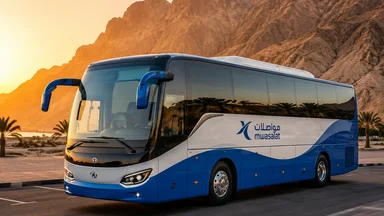
Oman Mwasalat Express Bus Math Favors Salalah Dawn Over Muscat Midday Departure
The Mwasalat express bus from Salalah to Muscat leaves twice daily: once around dawn, once near midday. Most travel blogs treat the two departures as interchangeable, but the math is not symmetrical. The dawn bus, departing in the 6:30–7:30 AM range, arrives in Muscat before noon, giving you a full afternoon for exploration. The midday departure, around 1:00–2:00 PM, hits the afternoon heat and drops you in Muscat after dark, effectively losing a day. For budget travelers, the choice is clear: dawn saves money, time, and comfort.
Why Salalah Dawn Beats Muscat Midday for Budget Travelers
The fare is the same in both directions — roughly OMR 5–7 as of late 2024 — but the value differs sharply. The dawn departure from Salalah lets you skip a night's accommodation. If you take the midday bus, you arrive in Muscat around 11 PM, meaning you need to book a hotel that night. A dorm bed in a Muscat hostel runs about OMR 5–10; a private room OMR 15–25. By taking the dawn bus, you can check into your lodging at noon, drop your bag, and start sightseeing immediately. That effectively saves one night's cost. There is also the heat factor: Oman's interior can reach 40–45°C in summer. The dawn bus travels during the cooler morning hours; the midday bus crosses the desert in peak heat. While the coach is air-conditioned, rest stops are not. Getting out at a petrol station at 3 PM when the tarmac shimmers is unpleasant. The dawn bus stops when the air is still bearable. Another hidden advantage: seat selection. The dawn departure is less popular among locals, who often prefer the midday bus for family travel. As a result, the early bus tends to have more empty seats, giving you a better chance at a row to yourself. On the midday run, especially on weekends, the coach can be full, with seats 70–80% occupied. One counterpoint: if you are coming from Muscat and heading to Salalah, the dawn departure from Muscat is also an option. But the logic flips: the Muscat dawn bus arrives in Salalah around noon, which is fine, but the midday bus from Muscat arrives at night, again costing a day. The principle holds: take the earliest departure in whichever direction you are going.
Mwasalat Network: Coverage Gaps and Reliable Corridors
Mwasalat, Oman's national bus operator, runs a network that covers most major towns but has notable gaps. The backbone is the Salalah–Muscat route, a roughly 10–12 hour journey along Highway 31 and 15. This is the most reliable long-distance service, with daily departures. The Muscat–Dubai international service, once popular, has been suspended since 2020. Some online guides still list it as active. It is not. Verify before planning. Interior routes like Muscat–Nizwa run 2–3 times daily, taking about 2 hours. From Nizwa, you can connect to Bahla and Jabrin, though frequencies drop to once daily or less. The Al Batinah coast route from Muscat to Sohar runs roughly every 2 hours. But the network does not serve many smaller towns — places like Sur, Ibri, or Adam have no Mwasalat service. For those destinations, a rental car or shared taxi is the only option. The Mwasalat app is the primary booking tool. It works reasonably well on iOS and Android, though the English version occasionally glitches — departure times may not update after schedule changes. The bus stations in Salalah and Muscat also sell tickets, but they accept only cash or local debit cards. Credit cards are not always accepted at counters. Arrive 30 minutes early to buy a ticket if you have not booked online. One gap worth noting: there is no direct bus from Muscat to the UAE as of 2024. Travelers heading to Dubai must either fly or take a shared taxi to the border and switch. Mwasalat's website is vague on this; some third-party blogs claim a bus runs, but it does not. The only cross-border option is the Oman–UAE bus operated by a private company, not Mwasalat, and it departs from a different station.
Cost Breakdown: Bus vs Rental Car vs Flying
For solo travelers, the bus is the cheapest option by a wide margin. According to Mwasalat's website, the Salalah–Muscat fare is OMR 5–7. This compares to a rental car at OMR 20–30 per day plus fuel (roughly OMR 10 for the 1,000 km drive). A one-way flight on Oman Air costs OMR 30–50, plus a taxi to and from airports (OMR 5–10 each way). The bus wins on pure cost. However, the time cost matters. The bus takes 10–12 hours; a flight is 1.5 hours plus 2 hours of airport transit. If your time is valuable, flying may be worth the premium. For a group of 3 or 4, a rental car becomes competitive: OMR 30–40 total split four ways is OMR 7.5–10 per person, similar to the bus, but with flexibility to stop and explore. The bus does not allow unscheduled stops. There are hidden costs to the bus: food and drink. The bus makes rest stops at petrol stations where snacks are limited and pricey — a small sandwich and water can cost OMR 2–3. Packing your own food saves money. Also, if you are prone to motion sickness, the winding mountain roads near Salalah can be challenging. The bus follows a fixed route; you cannot ask the driver to slow down. One more consideration: luggage. The bus allows one bag under the coach and one carry-on. Extra bags incur a fee of roughly OMR 1–2. For travelers with heavy gear, this can add up. Rental cars have no such limits. But for a typical backpacker load, the bus is fine.
Timing Patterns: When Demand Spikes and Fares Hold
Mwasalat does not use surge pricing. The fare for Salalah–Muscat remains flat year-round, as of 2024, which is unusual for a transport system. Whether you book a week ahead or on the day, the price is the same. This is good for budget planning but means no discounts for early booking. The only variable is availability: on weekends (Thursday–Saturday in Oman), the dawn bus can fill up 2–3 days ahead. The Kharif season, from June to September, brings monsoon rains to Salalah. This is peak tourist season for the south, and buses from Salalah to Muscat often sell out. If you plan to travel during Kharif, book at least a week in advance. The midday bus may have seats when the dawn bus is full, but you will pay the same fare for a less convenient departure. During Ramadan, schedules shift dramatically. Daytime departures are reduced; most buses run after Iftar, around 7–8 PM. This means the dawn bus effectively becomes an evening bus. If you travel in Ramadan, check the Mwasalat app for temporary timetables. The same flat fare applies, but the travel experience changes: rest stops may have limited food options until after sunset. Public holidays like Eid al-Fitr and Eid al-Adha cause occupancy spikes of 50% or more. Buses are often fully booked a week in advance. If you are flexible, travel a few days before or after the holiday. The flat fare means you do not save money by traveling off-peak, but you gain comfort and availability.
Onboard Realities: Comfort, Amenities, and Pit Stops
The Mwasalat coaches are modern, with reclining seats, air conditioning, and sometimes WiFi — though the WiFi signal is weak and often drops in remote areas. Seat pitch is acceptable for passengers under 6 feet tall; taller travelers may find legroom tight. The seats are cloth, not leather, and can get warm after a few hours. There are no power outlets on most buses, so charge your devices before departure. There is no meal service. The bus makes rest stops every 2–3 hours at petrol stations. These stations typically have a small shop selling chips, drinks, and pre-packaged sandwiches. The quality is mediocre; bring your own food. Water is available, but prices are higher than in supermarkets. A 1.5L bottle costs about OMR 0.5 at the station, versus OMR 0.2 in a store. Toilets are available onboard, but reliability varies. Some buses have clean toilets; others do not. It is safer to use the rest stops. The stops are usually 15–20 minutes, enough for a quick snack and bathroom break. The driver announces the stop duration; passengers are expected to return on time. Entertainment is limited to your own devices. The bus has no screens. Download movies or podcasts before you board. The scenery along the route is spectacular — from the green mountains of Salalah to the vast Rub' al Khali desert — but after a few hours, it becomes repetitive. Noise-canceling headphones are a good investment.
Stale Data Alert: What Online Guides Get Wrong
Many online guides still list the Muscat–Dubai bus as active. It has been suspended since 2020 due to the pandemic and has not resumed. For instance, Lonely Planet's 2023 guide and some blogs from 2023 claim it runs; they are wrong. The only way to get from Muscat to Dubai by road is via shared taxi or private car. Do not plan a trip around that bus. Fares quoted as OMR 3 are outdated. The current range is OMR 5–7, a reflection of fuel cost increases and inflation. If you see OMR 3 on a blog, the information is likely from 2019 or earlier. Similarly, some sources claim the Salalah–Muscat journey takes 8 hours. It takes 10–12 hours, depending on traffic and rest stops. The road is not a highway the entire way; there are mountain passes and single-lane sections. Third-party schedule aggregators often miss seasonal changes. During Kharif, some departures are added; during Ramadan, times shift. The Mwasalat app is the most reliable source, but its English version sometimes fails to display these changes. A phone call to the bus station 24 hours before departure is the safest way to confirm. The Salalah station number is +968 24 510 000; the Muscat station is +968 24 490 000. One more myth: that you can buy tickets online and show a digital ticket. The Mwasalat app does issue e-tickets, but some drivers insist on a printed copy. If you cannot print, ask the driver politely; most will accept the digital version, but it is not guaranteed. Better to print at your hotel or at an internet cafe.
Practical Tips for a Smooth Journey
Beyond the departure time choice, a few practical steps can make the bus trip more comfortable. First, pack a neck pillow and a light blanket — the air conditioning can be chilly, especially in the morning. The bus temperature is set centrally, and you cannot adjust it at your seat. Second, bring snacks and water from a supermarket rather than buying at rest stops. A bag of dates, some nuts, and a large bottle of water will cost about OMR 1–2 total, versus OMR 3–4 for equivalent items at the station. Third, wear comfortable clothing and shoes. The bus has no footrests, so being able to shift position helps. Fourth, use the rest stop toilets rather than the bus toilet whenever possible. The bus toilet can become unpleasant after a few hours, and not all are well-maintained. Fifth, keep your valuables with you at all times. While Omani buses are generally safe, petty theft can occur at rest stops. Leave your main bag locked in the luggage compartment and carry your daypack into the station. Sixth, download offline maps and entertainment before departure. Mobile signal is intermittent in the desert, so streaming is unreliable. A podcast or audiobook can make the hours pass faster. Seventh, if you are prone to motion sickness, take medication before boarding. The mountain roads near Salalah are winding, and the bus driver may not adjust speed for curves. Eighth, consider bringing a small cushion or folded jacket to support your lower back. The seats are firm, and after several hours, back pain can set in. Finally, check the Mwasalat app for any last-minute schedule changes the morning of your trip. Delays are rare, but they do happen, especially during foggy weather in the Dhofar mountains.
Alternative Routes and Connections
If you are traveling beyond Muscat, the bus network offers limited onward connections. From Muscat, you can take a bus to Nizwa, Sohar, or Buraimi. The Nizwa bus departs from the Azaiba bus station, about 30 minutes from the main Muscat station by taxi. The fare to Nizwa is around OMR 2–3, and the journey takes about 2 hours. From Nizwa, you can take a shared taxi to Bahla or Jabrin for about OMR 1–2 per person. For Sohar, the bus departs from the same station, with fares around OMR 3–4 and a journey time of roughly 3 hours. Buraimi, on the UAE border, is served by a daily bus from Muscat, but frequency is low — check the app for exact times. There is no direct bus from Salalah to other cities besides Muscat. If you want to go from Salalah to Nizwa, you must take the bus to Muscat and then transfer. This adds significant time; a rental car might be more efficient for multi-city itineraries. Another option is to combine the bus with a shared taxi for the final leg. For example, from Muscat to Sur, you can take a bus to a nearby town like Ibra and then a taxi. But this is cumbersome. For most travelers, the bus is best for point-to-point journeys on the main corridor. For exploring Oman's interior, a rental car offers far more freedom, even if the cost per person is similar for groups.
Conclusion: Trade-offs and Practical Considerations
The dawn bus from Salalah to Muscat is the clear winner for solo budget travelers, but it is not the only option. For groups of three or more, a rental car can be equally cost-effective and offers flexibility to stop at attractions like the lost city of Ubar or the sinkholes of the Dhofar region. The bus is rigid: you cannot linger at a scenic viewpoint or detour to a hidden wadi. If you are traveling with children, the midday bus might be more convenient because it avoids an early wake-up, even though it arrives late. The dawn bus requires you to be at the station by 6:00–6:30 AM, which means leaving your hotel before breakfast. Some hotels offer packed breakfasts; others do not. The midday bus allows a leisurely morning and a full breakfast, but you lose the afternoon upon arrival. Another trade-off: the bus is not ideal for travelers with mobility issues. The steps into the coach are steep, and rest stops may have uneven surfaces. For such travelers, a rental car or taxi is more comfortable. Ultimately, the choice depends on your priorities: cost, time, comfort, and flexibility. The dawn bus maximizes savings and sightseeing time, but it demands an early start and a willingness to stick to a schedule. For those who value convenience over cost, the midday bus or a flight may be better. But for the budget-conscious traveler who wants to see Oman without breaking the bank, the dawn Mwasalat bus is hard to beat.