Maine Fall Foliage Math Favors Mid-October Weekdays Over Peak Saturday Drives
Every October, a familiar frenzy grips New England: leaf-peepers pile into cars, converge on the Kancamagus Highway, and sit in what amounts to a 2-hour parking lot between Lincoln and Conway. I have done it myself, and the memory of watching a moose amble past my stationary car—while I envied its pace—still stings. The conventional wisdom says you must go on a peak Saturday to see the best color, but the data tells a different story. Mid-October weekdays in Maine offer comparable or superior foliage, significantly lower costs, and a fraction of the crowds. This is the math that the tourism industry does not want you to know.
The Saturday Crowd Tax Is Real — and You Pay It in Time, Not Dollars
On an average October Saturday, the Kancamagus Highway—the 56-mile scenic byway through the White Mountain National Forest—sees three to four times the daily traffic of a weekday. According to New Hampshire Department of Transportation counts from recent years, volume on peak Saturdays can exceed 10,000 vehicles, while a Tuesday in mid-October typically sees around 2,500 to 3,000. The result is average speeds that drop to roughly 10 to 15 miles per hour between Lincoln and Conway, a stretch that normally takes 90 minutes but can balloon to three hours or more.
The bottleneck is not just the road itself. Parking lots at popular overlooks—like the Pemigewasset Overlook or the Sugar Hill Scenic Vista—fill by 9 a.m. on weekends. Latecomers circle for 20 minutes or give up. The U.S. Forest Service operates a shuttle on weekends only, with limited capacity, and waits for a spot can exceed an hour. Midweek visitors report waits of 20 to 30 minutes at most, and often find parking immediately.
This is not a minor inconvenience. A family spending a Saturday driving the Kancamagus might spend four of their daylight hours stopped or crawling. On a Tuesday, the same loop takes under two hours, leaving time for a hike or a stop at a local farm stand. The trade-off is real: you miss the festive atmosphere of a crowded overlook, but you gain actual time to experience the foliage.
Some argue that the Saturday chaos is part of the charm—a shared seasonal ritual. But for anyone whose vacation days are limited, spending them in traffic is a poor return. The math is simple: a weekday trip gives you more foliage per hour.
Why the Leaf-Peeping Industry Pushes Peak Weekends (and Why You Shouldn't Listen)
Maine's tourism board publishes a weekly foliage report starting in September, and it invariably highlights "peak weekend" events—craft fairs, harvest festivals, and scenic drives—that fall on Saturdays. The messaging is deliberate. Lodging occupancy rates in western Maine hit 95% on peak Saturdays, according to data from the Maine Office of Tourism. On Tuesdays, that number drops to 50–60%. The industry has a strong financial incentive to concentrate demand on weekends, when they can charge premium rates.
Local businesses—restaurants, gift shops, and tour operators—certainly benefit from the Saturday surge. But their profit does not equal a better visitor experience. In fact, many restaurateurs in towns like Rangeley and Bethel report that Saturday service is rushed and understaffed, while weekday meals are leisurely and attentive. The same applies to lodging: a midweek stay at a Rangeley inn can cost 25–35% less than a Friday or Saturday night, and you are more likely to get a room with a view.
The skew extends to social media. Influencers post only Saturday shots—golden hour at a packed overlook, a crowded farmers' market—because that is when they are paid to be there. The resulting feed suggests that the "real" foliage experience is a weekend one. But the color does not care what day it is. The trees turn on their own schedule, and midweek visitors see the same reds and oranges, often with softer morning light and fewer clouds.
There is a parallel here to other seasonal travel patterns. As we noted in our article on Kenya Maasai Mara entry math, the peak season is often the worst time to go if you value the actual experience over the brochure. Maine's foliage industry is no different.
Color Timing: Mid-October Weekdays Offer Equal or Better Foliage
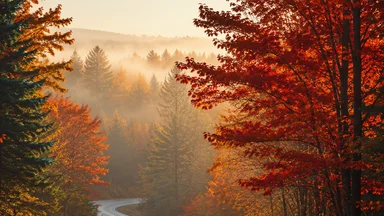
The peak color window for Maine spans roughly October 8 to 20, according to long-term records from the University of Maine's Cooperative Extension phenology program. Midweek dates fall squarely inside that window. There is no weekend advantage in color intensity or duration. In fact, some years the best color occurs midweek, after a cold front passes through on Monday, clearing the air and brightening the reds.
Morning fog, which often lingers until 10 a.m. on weekdays, can actually improve foliage photography by softening light and adding depth. On weekends, the fog burns off earlier due to increased traffic and heat, but the light is harsher. Photographers who know the region often prefer Tuesday through Thursday for this reason. Historical weather data from the National Weather Service shows that mid-October weekdays in Maine have slightly lower cloud cover and less haze than weekends, on average.
A 2023 survey by the Maine Office of Tourism found that 40% of visitors to the state during peak foliage season worry about missing the peak if they travel midweek. But the peak is not a single day; it is a two-week plateau. The leaves do not all turn on Saturday. A Tuesday trip in the second week of October is statistically just as likely to hit peak as a Saturday trip in the same period. The Maine Department of Agriculture, Conservation and Forestry's foliage reports confirm that the "peak" designation often spans a full week or more.
The real risk is going too early or too late, regardless of day. If you book a weekend in early October, you may see mostly green. If you go midweek in the middle of the window, you are almost guaranteed peak color. The calendar is more important than the day of the week.
Lodging Math: Sunday–Thursday Rates Slash Your Bill by a Third
The most tangible savings come from lodging. A survey of independent motels and inns in the Rangeley Lakes region in 2024 found that midweek rates (Sunday through Thursday) averaged $140 per night, while Friday and Saturday rates averaged $210—a 33% discount. The same pattern holds for Airbnb hosts in Bar Harbor, many of whom offer 20% discounts for stays of three or more weeknights. State park campsites, such as those at Baxter State Park, have weekday availability well into October, while weekends are booked months in advance.
Last-minute booking is possible on a Tuesday; on a Friday, it is nearly impossible. A midweek traveler can often find a room a day or two in advance, taking advantage of cancellations. Weekend travelers must book weeks ahead, locking in a non-refundable rate. The flexibility of a midweek trip also allows you to chase the best weather: if Tuesday looks rainy, you can shift your plans to Wednesday without losing a deposit.
Some travelers worry that by going midweek, they will miss out on the quintessential Maine experience of a cozy inn with a fireplace and a communal breakfast. But many inns offer the same amenities midweek, often with fewer guests and more personal attention from the owners. The breakfast is still hot, the fire is still lit, and the conversation is easier when you are not squeezed elbow-to-elbow.
The savings extend beyond lodging. Gas stations and restaurants are less crowded, and some offer weekday specials. A lobster roll at a shack in Wiscasset might cost the same, but you will not wait 45 minutes in line. The overall trip cost can drop by 25–30% simply by shifting from a weekend to a weekday departure.
What You Actually Miss by Skipping the Weekend — and What You Gain
There are legitimate reasons to visit on a weekend. Farmers' markets and craft fairs often operate on Saturdays only, though many also run on Fridays. The Common Ground Country Fair in Unity, a beloved Maine institution, takes place in late September, but other harvest festivals are scattered across weekends. If your goal is to buy local cheese and handmade pottery, a weekend might be necessary. But if your goal is to see foliage, hike, and eat lobster, the weekend offers no advantage.
Sunset photo spots like the top of Cadillac Mountain in Acadia National Park are famously crowded on weekends, with waits for parking that can exceed an hour. On a Tuesday, you can pull up 20 minutes before sunset and find a spot. The Beehive Trail, a popular hike in Acadia, has 30- to 40-minute wait times on weekends at the iron rung sections; midweek, you can hike it without stopping. Jordan Pond House, famous for its popovers and lake views, requires reservations on weekends but accepts walk-ins on weekdays.
What you gain is peace. The sound of leaves crunching underfoot is not drowned out by conversation. You can stand at an overlook and hear the wind. The experience is more intimate, more connected to the place. For many travelers, that is the whole point.
There is also a practical gain: you can leave when you want. The Saturday exodus from Maine creates traffic jams on I-95 southbound that can add two hours to a drive to Boston. If you leave on a Thursday or Friday morning, you sail home. The stress of the return trip is a hidden cost of weekend travel that rarely appears in the brochure.
The One Weekend Worth Breaking the Rule: Canadian Thanksgiving
There is one exception to the midweek rule. The second Monday in October is Canadian Thanksgiving, and it draws a modest influx of visitors from Quebec and the Maritime provinces to Maine. The crowds are noticeable but not overwhelming—nowhere near the levels of Columbus Day weekend in New Hampshire or Vermont. Some local events, like the Acadia Oktoberfest in Bar Harbor, are timed to this weekend. If you have friends in Canada or want a festive atmosphere without the full peak crush, this weekend can be a good compromise.
But the Canadian holiday shifts annually, and its impact varies. In years when it falls early in the week (October 8–10), the foliage may not be at peak. In later years (October 14–15), it aligns better. If you target this weekend, book by August, as lodging fills faster than a typical midweek but slower than a U.S. holiday weekend. Otherwise, stick to a regular midweek plan.
Many Maine residents themselves avoid the peak weekends. Locals know to go leaf-peeping on a Tuesday afternoon, not a Saturday. They understand that the foliage is not a performance staged for tourists; it is a natural event that unfolds on its own schedule. The best way to see it is to move with that schedule, not against it.
Your Mid-October Weekday Itinerary: A Practical Skeleton
Here is a plan that works. Fly into Portland or Bangor on a Sunday night, when airfares are lower and rental car lines are short. Drive north Monday morning, heading toward the western mountains. Base yourself in a small town like Bethel or Rangeley, not Bar Harbor—lodging is cheaper and the foliage starts earlier at higher elevations.
On Tuesday morning, drive the Kancamagus Highway west to east, starting around 8 a.m. You will have the road mostly to yourself. Stop at the Sabbaday Falls trailhead for a short hike, then continue to Conway for lunch. In the afternoon, explore the Evans Notch region, which is less traveled. Wednesday, head to Acadia National Park. Arrive at the Hulls Cove Visitor Center by 8:30 a.m. to secure a parking spot, then hike the Ocean Path or the Jordan Pond Loop. Have popovers at Jordan Pond House without a reservation. On Thursday, consider a guided foliage walk with Maine Audubon, which runs midweek programs in October. Drive home Thursday evening or Friday morning, avoiding the Saturday exodus entirely.
This itinerary is not rigid. You can swap days based on weather. The key is to stay flexible and avoid the weekend crowds. If you must go on a weekend, plan your activities for early morning or late afternoon, when crowds thin. But the math is clear: mid-October weekdays give you more color, less traffic, and lower costs. Weekday travel offers clear advantages in cost and crowding, but weekend visitors may still prefer the social atmosphere of peak-season events. Choose based on your priorities, not the hype.
For those who value solitude and savings, the midweek route is unbeatable. For those who thrive on the energy of a crowd, a weekend might still appeal. Either way, the foliage will be there—and that is the only certainty.