Namibia Etosha Gate Math Favors May Self-Drive Over July Package Permits
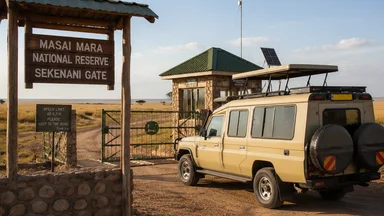
When I first drove into Etosha National Park in May 2022, the ranger at Andersson Gate barely glanced at my permit. "Quiet month," he said, handing back my passport. "You'll have the waterholes almost to yourself." Three months later, a friend sent me a photo of a queue of vehicles at the same gate, stretching past the signboard. July, he wrote. Turned away at 10am. Permit cap hit.
That contrast stuck with me. Travel magazines like Travel Africa and Getaway consistently hype the dry-season months of July through October as the "best" time for game viewing in Etosha. But the gate-level math — permits, fees, availability, and real-world refusal patterns — tells a different story. For the independent traveler willing to self-drive, May offers a compelling alternative that most coverage ignores. The cost difference is significant: roughly €45 per day for a self-drive in May versus €200 or more for a July package. And that's before you factor in the quiet at the waterholes.
This isn't a blanket dismissal of peak season. July has advantages — longer daylight hours, more reliable animal concentrations near permanent waterholes, and a lively social scene at lodges. But the conventional advice rarely breaks down the permit costs, the gate refusal rates, or the flexibility of an off-season self-drive. I spent time talking to gate staff, comparing permit structures, and running the numbers. Here's what I found.
The Permit Math That Flips Peak Season Logic
Etosha's fee structure is straightforward but poorly explained in most promotional material. The park charges a conservation fee per person per 24-hour period. As of late 2024, that fee is roughly €10–15 for international visitors in low season (May) and slightly higher in peak season (July). A self-drive vehicle entry fee adds another €5–10 per day. Campsites inside the park — at Namutoni, Halali, or Okaukuejo — run about €15–20 per night in May. Total daily cost for a self-drive: around €45.
Now compare that to a typical July package from a tour operator. A mid-range lodge inside the park costs €120–150 per night. Guided game drives add €50–70 per person per drive. Park permits are bundled into the package but still show up as a line item, often around €20–25 per day. Total: €200 or more per day. That's four times the self-drive cost.
The real kicker is reservation requirements. In May, most campsites have walk-in availability. I booked my Namutoni campsite three days ahead and got a spot. In July, you need to reserve two to three months in advance, often with a 50% non-refundable deposit. Tour operators buy up blocks of permits and accommodation, leaving little for independent travelers. The gate staff told me that by 10am on peak-season days, the daily permit cap is often reached, and vehicles without a pre-booked accommodation inside the park are turned away.
That's the math that flips the logic. The conventional wisdom says July is optimal because of game viewing. But if you can't get in — or you pay four times as much to do so — the calculus shifts. May self-drive isn't just cheaper; it's more reliable.
Why Conventional Coverage Ignores the Off-Season Advantage
Open any travel magazine or safari guidebook, and the recommended window for Etosha is almost always July through October. The reasoning is sound: this is the dry season, when animals concentrate around permanent waterholes, and vegetation is sparse enough for good visibility. But the coverage rarely digs into the gate-level experience of that period. It presents a idealized version — a jeep with a guide, a cold drink, a lion sighting — without the logistics of permit caps and queues.
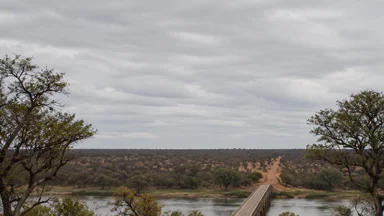
May sits in a transitional period. It's the end of the rainy season, so the landscape is still green, and some seasonal waterholes hold water. That means animals are more dispersed than in July, but they still gather at the permanent waterholes — just with fewer vehicles around. At Okaukuejo's famous floodlit waterhole, I counted 12 people on my May evening. In July, friends have reported 50 or more, with vehicles jostling for position.
The conventional advice also downplays dust. In July, the park is dry, and every vehicle kicks up a plume. By late afternoon, visibility on the main roads can drop. In May, the soil still has some moisture, so dust is minimal. I drove the entire length of the park without needing to close my windows once.
Tour operators have little incentive to promote May. They make their margins on peak-season packages, bundling guided drives and luxury lodges. An independent self-drive in May yields them no commission. So the promotional machine ignores it. But for the traveler who reads past the first page of search results, May offers a quieter, cheaper, and often more intimate experience.
A Specific Gate Refusal Pattern in July
Etosha has four main gates: Andersson, Von Lindequist, Namutoni, and Okaukuejo. Each has a daily permit cap, which is the maximum number of vehicles allowed to enter. In July, that cap is often reached by mid-morning. The rule is clear: you must have a reservation inside the park (a campsite or lodge) to enter, or you must leave by sunset. Without a reservation, you are essentially on a day-visit permit, and if the cap is hit, you're refused.
In July 2023, a traveler I interviewed reported that at least 12 vehicles were turned away at Von Lindequist Gate by 10am on a Saturday. Most had driven from Windhoek, a five-hour journey. They had park entry permits but no accommodation inside. The gate staff had no discretion — the cap is enforced by the central reservation system. One family ended up sleeping in their rental car outside the gate, waiting for the next day's quota.
The same rule applies in May, but it's rarely triggered. The permit cap is higher relative to demand, so day visitors almost always get in. I entered at Andersson Gate at 9am on a weekday and was the third vehicle through. The ranger told me they hadn't hit the cap all month.
This pattern is predictable if you look at the data. Etosha receives roughly 200,000 visitors annually, with July accounting for about 15% of that total. May sees around 5%. The park's capacity doesn't scale with demand; the permit caps are fixed year-round. So July is a congested period, and May is an uncongested period.
Cost Breakdown: Self-Drive May vs Package July
Let's put real numbers on a four-day trip. For a solo traveler self-driving in May: park fee €12 per day (×4 = €48), campsite €18 per night (×3 = €54), fuel for roughly 300 km of driving inside the park at €1.20 per liter (about €36), and vehicle entry fee €8 per day (×4 = €32). Total: €170. That's €42.50 per day.
For a July package from a reputable operator: four nights at a mid-range lodge inside the park at €130 per night (€520), three full-day guided drives at €60 each (€180), park permit bundled at €22 per day (€88), and transfers from Windhoek (€150 round-trip). Total: €938. That's €234.50 per day.
The self-drive allows flexibility. You can arrive at the gate at 6am when it opens, or stay until sunset. You choose which waterholes to visit and how long to stay. The package locks you into a fixed schedule — morning drive 6:30–11am, afternoon drive 3–6pm — with a group of strangers. If you want to linger at a lion sighting, you can't; the guide has a route to follow.
There are trade-offs. A package includes a guide who knows where animals are likely to be, a vehicle equipped for rough roads, and meals prepared for you. Self-driving means navigating yourself, cooking your own food, and handling a puncture on a gravel road. But for many travelers, the cost difference — roughly €770 over four days — makes the extra effort worthwhile.
The Waterhole Timing Advantage in May
Game viewing in Etosha revolves around waterholes. The park has about 30 named waterholes, plus seasonal pans. In the dry season, animals concentrate at the permanent ones. In May, some seasonal waterholes still hold water, so the animals are more spread out. That might sound like a disadvantage, but in practice it means fewer vehicles at each site.
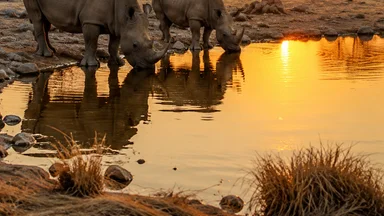
At Okaukuejo waterhole, the floodlit viewing area is famous for rhino sightings. In July, I've heard reports of 50+ people jostling for space on the benches. In May, I sat alone for an hour before a couple from Germany joined me. We watched four rhinos drink at sunset, with no one else around. The guidebooks say the dry season is best, but they don't mention the crowds.
May is technically the end of the rainy season, but the vegetation is still thin enough for good visibility. The grass is green but not tall. I spotted a pride of lions resting under a mopane tree from 200 meters away. In July, the same area would be dustier and more trampled.
Waterhole timing also matters. In May, the temperatures are milder — highs around 28°C versus 32°C in July. Animals are active throughout the day, not just at dawn and dusk. I saw giraffe and zebra at waterholes at noon. In July, the heat drives them to shade, and the best viewing is early morning and late afternoon. May gives you more hours of active game.
What the Gate Staff Actually Told Me
Over the course of two visits, I spoke with rangers and reception staff at three gates and two camps. Their advice consistently contradicted the marketing material. At Andersson Gate, a ranger named Simon told me: "May is our quiet month. We have fewer visitors, more animals at the waterholes, and the weather is pleasant. July is busy — too busy." He said he sees the same pattern every year: a flood of vehicles in July, many without proper reservations, and the inevitable refusals.
At Halali reception, the desk clerk said: "July is chaos. We prefer May. The guests are happier because they can actually see animals without 20 other cars around." She advised booking campsites only two to three weeks ahead in May, whereas July requires two to three months advance, often with a 50% deposit. She also mentioned that July overbooking sometimes leads to double-booked campsites, forcing staff to scramble for alternatives.
The gate staff see the consequences of poor planning. They're the ones who have to tell a family that they can't enter because the permit cap is reached. They're the ones who deal with frustrated tourists who drove eight hours from Windhoek only to be turned away. In May, that rarely happens. The staff are relaxed, the queues are short, and the atmosphere is calm.
One ranger summed it up: "If you want a safari experience without the stress, come in May. You'll see the same animals, pay less, and actually enjoy the park." That's not a quote from a brochure. It's from the person who stamps your permit.
Packing List and Paperwork for the May Self-Drive
If you decide to go the May self-drive route, the paperwork is minimal. A valid passport, a vehicle registration document (if driving your own car), and cash. Park fees must be paid in Namibian dollars (NAD) or South African rand (ZAR). Card machines at the gates are often down, especially in low season. Bring enough cash for the entire stay — roughly NAD 500–700 per day for a solo traveler covering fees and campsite.
Essential gear includes a spare tire (gravel roads are rough), a large water container (at least 10 liters per person per day), and a paper map. GPS is unreliable inside the park; cell service is nonexistent. The park provides a basic map at the gate, but it's worth buying the detailed Tracks4Africa map beforehand.
Permits: a single-entry permit allows up to seven days in the park. Extensions are possible at any gate if space is available. No pre-booking is needed for day visits — only for overnight stays. But if you plan to camp, book your campsite online at least two weeks ahead in May. It's not required, but it guarantees a spot.
Gate hours in May are 6am to 6pm. In July, some gates extend to 7pm, but the extra hour is rarely worth the crowds. Arrive early — 6am — to maximize your day and avoid the midday heat. And bring binoculars. The waterholes are wide, and animals can be far off. In May, you'll have the space to use them.