How a Behavioral Nudge for Organ Donation Moved into Public Health Policy
In the mid-2000s, a handful of researchers began asking a deceptively simple question: could changing the default on a donor registration form save lives? The answer, it turned out, was yes—and the policy ripple effects would extend far beyond organ donation, reshaping how governments approach everything from retirement savings to vaccination.
The Default That Saved Thousands
For decades, organ donation policies in most countries followed an opt-in model: citizens had to actively register as donors. Consent rates hovered around 40 to 60 percent in such systems. But in countries with opt-out policies—where everyone is presumed a donor unless they explicitly decline—consent rates often exceeded 90 percent. Austria, for instance, achieved a consent rate of roughly 99 percent under its opt-out system, compared with Germany's 12 percent under opt-in, despite the two countries sharing cultural and economic similarities.
The size of the gap caught the attention of behavioral scientists. A 2003 study by Eric Johnson and Daniel Goldstein formally demonstrated the effect in a controlled experiment: when participants were assigned to an opt-out condition, organ donation consent jumped by about 15 percentage points relative to an opt-in condition. The finding was robust across multiple scenarios, suggesting that the default itself—not just underlying attitudes—was driving the difference.
Greece provided a natural test. In 2013, the country introduced an opt-out organ donation law, but implementation was uneven. Early data showed a modest increase in registrations, but the policy also revealed the importance of accompanying infrastructure: without a centralized registry and public awareness campaigns, the default alone could not guarantee higher donation rates. Still, the experiment demonstrated that even imperfectly applied defaults could shift behavior measurably.
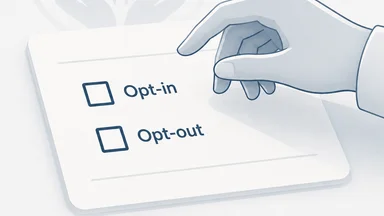
Policy makers took notice. The idea that a simple administrative tweak—changing a check box from opt-in to opt-out—could save thousands of lives each year was too compelling to ignore. Countries from Argentina to Wales began considering similar legislation, marking the first major wave of what would become a global behavioral policy movement.
From Lab to Law: The Behavioral Toolkit
The organ donation nudge did not emerge in a vacuum. It was a direct application of choice architecture, a concept popularized by Richard Thaler and Cass Sunstein in their 2008 book Nudge. The core insight is that the way options are presented—the default, the order, the framing—powerfully shapes decisions, often without the decision maker's awareness. Thaler and Sunstein argued that governments could use these principles to improve citizen welfare while preserving freedom of choice, a philosophy they called libertarian paternalism.
The UK Behavioural Insights Team, established in 2010, became the world's first government nudge unit. Its early projects included simplifying tax reminder letters and testing default enrollment in pension schemes. Organ donation was a natural fit. In 2015, the team helped design a trial that tested opt-out wording on driver's license applications, finding that a simple change in the question order increased donor registrations by roughly 10 percent.
Two other principles from the behavioral toolkit proved critical. Simplification meant reducing the steps required to register or opt out. Salience involved making the donation decision more visible—for example, by placing it on forms that citizens already had to complete, like tax returns or vehicle registration. These techniques, combined with defaults, created a package that could be adapted to different policy contexts.
The diffusion of these ideas from academic psychology into public administration was not automatic. It required intermediaries—researchers who could translate lab findings into policy memos, civil servants willing to test small changes, and politicians who saw electoral advantage in low-cost, high-impact reforms. By the late 2010s, nudge units had been established in over a dozen countries, and organ donation remained their flagship case.
Why Opt-Out Works: Psychological Mechanisms
The effectiveness of opt-out policies rests on several well-documented psychological mechanisms. The most important is status quo bias: people tend to stick with the current state of affairs, even when a change would benefit them. In the context of organ donation, the default—whether opt-in or opt-out—becomes the reference point, and deviating from it requires effort that many are unwilling to expend.
Inertia amplifies this effect. Registering as a donor under an opt-in system typically requires filling out a form, mailing it, or visiting a website. Under opt-out, the same inertia works in the opposite direction: failing to act results in donor status. For busy individuals with competing priorities, the path of least resistance is to do nothing, and the default determines the outcome.
Perceived effort plays a role. Even when the steps to opt out are minimal—a single click or a signed form—many people overestimate the difficulty. This perception is especially strong when the decision involves emotionally charged topics like death and organ retrieval. Procrastination becomes a rational response to discomfort, and the default exploits that tendency.
Loss aversion also contributes. Under an opt-out system, choosing to opt out feels like losing a prosocial identity—the sense of being a person who would save lives. People prefer to avoid that psychological loss, so they stay with the default. Together, these mechanisms create a powerful behavioral lock-in that opt-in systems cannot match.
Resistance and Rebuttals
Despite its effectiveness, the opt-out approach has drawn sharp criticism. Some ethicists argue that it amounts to manipulation: by exploiting cognitive biases, the state steers citizens toward a decision they might not consciously endorse. The concern is that defaults override autonomous choice, even if technically a person can opt out. In several countries, including Brazil and Chile, public backlash led to the reversal or modification of opt-out laws.
Evidence from Spain, which has one of the world's highest organ donation rates but operates under an opt-in system, complicates the picture. Spain's success is attributed to a well-funded transplant coordination network, not its default. This suggests that defaults are not the only lever; infrastructure and cultural trust matter enormously. In Chile, a 2010 opt-out law was met with widespread confusion and distrust, partly because the public was not adequately informed about the change.
Proponents of opt-out policies counter that transparency mitigates ethical concerns. When citizens are clearly informed about the default and given simple ways to change it, the nudge becomes a tool for aligning policy with people's stated preferences—most surveys show strong majority support for organ donation. The problem, they argue, is not manipulation but the status quo of low registration rates under opt-in systems, which costs lives.
The debate highlights a tension at the heart of behavioral policy: how far should governments go in using psychological insights to shape behavior? There is no universal answer, but the organ donation case shows that reasonable people can disagree on the ethics even when the evidence for effectiveness is strong.
Scaling the Nudge: Implementation Pitfalls
Moving from a lab experiment or a pilot study to nationwide policy is never straightforward. Organ donation nudges face several implementation challenges. Data infrastructure is a critical prerequisite: an opt-out system requires a centralized, up-to-date registry of citizens and their donation preferences. Many countries, particularly in the developing world, lack such systems, making opt-out unenforceable in practice.
Family consent override is another complication. Even in opt-out countries, many hospitals still consult the deceased's family before proceeding with organ retrieval. If the family objects, the donation may not go ahead, weakening the link between the default and actual transplants. In the United Kingdom, which adopted an opt-out system in England in 2020, early data showed that family override rates remained substantial, especially among ethnic minorities.
Cultural variation in trust also affects outcomes. In societies with low trust in government or healthcare institutions, an opt-out default can be perceived as a government grab for organs. This was a factor in the backlash in Brazil, where a 1997 opt-out law was repealed after rumors circulated that the state would harvest organs without consent. Effective implementation requires not just a legal change but also sustained public communication and engagement with community leaders.
France's rollout of an opt-out system in 2017 offers lessons. The government invested in a public registry, launched awareness campaigns, and trained healthcare workers to handle family conversations. Even so, registration rates rose only modestly in the first two years, suggesting that defaults alone are insufficient without complementary efforts. The French experience underscores that a nudge is not a magic bullet; it is one tool in a larger policy toolkit.
What Behavioral Science Changed in Policy
The organ donation nudge is perhaps the most visible success of a broader shift in public policy. Before behavioral science entered the mainstream, governments typically relied on two approaches: education campaigns to change attitudes, and mandates or bans to compel behavior. The nudge approach offered a third way—changing the environment in which decisions are made, without restricting choice.
The impact on organ donation waitlists has been measurable. A 2019 study estimated that if all US states adopted opt-out policies, the number of deceased donor transplants could increase by roughly 5,000 per year, reducing the waitlist by over 10 percent. While these projections are debated, even modest gains translate into lives saved. The UK's opt-out law, for example, was followed by a 4 percent increase in registrations in its first year, with expectations of gradual further growth.
Cross-disciplinary diffusion was key. The idea that defaults could shape outcomes originated in psychology and behavioral economics, but it was adopted by public health researchers, then by policy practitioners, and finally by legislators. Each step required translation and adaptation. The same pattern of cross-field migration can be seen in other scientific domains, where tools developed in one discipline solve problems in another.
Today, nudge units exist in over 30 countries, from Singapore to Canada. They apply behavioral insights to tax compliance, energy conservation, and public health. Organ donation remains the emblematic case—the example that policy makers cite when explaining why behavioral science matters. But the field has moved beyond that single application.
The Next Frontier: Beyond Organ Donation
The success of the organ donation nudge has inspired similar approaches in other domains. Retirement savings opt-out, pioneered in the United States with the Pension Protection Act of 2006, dramatically increased enrollment in 401(k) plans. Workers who were automatically enrolled stayed in the plan at much higher rates than those who had to opt in, with participation rates rising from around 40 percent to over 90 percent within a few years.
Vaccination scheduling nudges have also shown promise. During the COVID-19 pandemic, several countries tested default appointment systems, where citizens were automatically scheduled for a vaccine slot and could reschedule or cancel rather than having to book proactively. Early evidence suggested that such defaults increased uptake by 10 to 15 percentage points, though the effect varied by context and population.
Energy conservation defaults are another area of active research. Some utilities now enroll customers in green energy programs by default, with the option to switch to a standard plan. Participation rates in green programs can exceed 80 percent under opt-out, compared with less than 10 percent under opt-in. The same mechanism—inertia and status quo bias—produces strikingly similar results across very different domains.
Yet the limits of the nudge approach are becoming clearer. Defaults work best for one-time decisions where the desired action aligns with most people's preferences. For ongoing behaviors like diet or exercise, or for decisions that require significant information processing, nudges have smaller effects. There is also a risk of nudge fatigue, where citizens become cynical about being manipulated. The unexpected consequences of small procedural gaps in other fields serve as a reminder that even well-designed interventions can fail when context is ignored.
The organ donation nudge story is not over. As more countries adopt opt-out policies, researchers are studying long-term effects, family override rates, and equity across demographic groups. What started as a simple behavioral experiment has become a test case for how science can inform policy—and a cautionary tale about the gap between a lab result and a functioning system. The default may be powerful, but it is not destiny.
Lessons from Cross-Country Comparisons
Examining the adoption of opt-out organ donation across different countries reveals important nuances that inform future policy design. In Argentina, which implemented an opt-out law in 2018, the government paired the default change with a national awareness campaign and a simplified online registry. Early results showed a roughly 10 percent increase in donor registrations within the first year, though actual transplant rates rose more slowly due to infrastructure bottlenecks. This mirrors the Greek experience, where the default effect was real but limited by logistical capacity.
In Wales, which adopted an opt-out system in 2015, the policy was introduced alongside a public information campaign that emphasized the ability to opt out easily. A study published a few years later found that awareness of the new law was high, but family override rates remained around 20 percent—meaning one in five families still refused donation despite the deceased's presumed consent. This highlights that the default alone cannot override deeply held cultural or religious beliefs, and that trust-building with communities is essential.
Sweden offers a contrasting case. The country operates a soft opt-out system where family consent is still required, effectively making the default less powerful. Donation rates in Sweden are high, but they are attributed more to well-organized transplant coordination and public trust than to the default itself. This suggests that opt-out policies are most effective when embedded in a broader ecosystem of transparency, infrastructure, and community engagement.
These cross-country comparisons also reveal equity concerns. In several opt-out countries, registration rates among ethnic minorities and lower-income groups have been lower than the general population, partly due to lower trust in healthcare systems. For example, in the United Kingdom, early data after the 2020 opt-out law showed that donor registrations among Black and Asian communities increased less than among white populations. This has prompted calls for targeted outreach and culturally sensitive communication to ensure that the benefits of the nudge are distributed equitably.
The variation in outcomes across countries reinforces a key lesson: the default is a powerful tool, but its effectiveness depends on context. Policy makers must consider existing infrastructure, cultural attitudes, and the capacity for public communication. A nudge that works in one setting may backfire in another if these factors are ignored.